Webinar
September 8, 2026
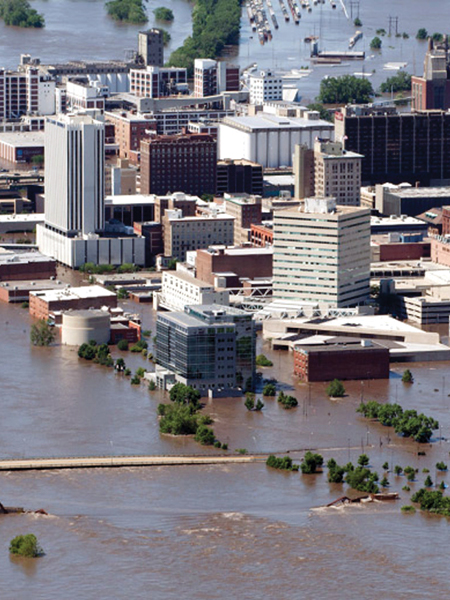
As climate-related risks continue to intensify, buildings are increasingly exposed to extreme weather events, wildfires, and long-term environmental stressors. For today’s high-performance buildings, resilience is no longer an added feature: it is a core design objective. Owners, architects, and engineers are being challenged to deliver buildings that not only meet performance goals under normal conditions, but also maintain safety, functionality, and durability during and after disruptive events.
In this webinar, we will explore how an integrated approach to structural, building enclosure, and fire life safety engineering can support a comprehensive and resilient design. Drawing from cross-disciplinary experience and project case studies, the session will examine strategies to address multiple hazards, including flood, wind, fire, and extreme heat. Key topics will include the role of structural systems in supporting passive survivability under extreme loading conditions, the performance of building enclosure systems in limiting environmental exposure and damage, and fire protection approaches that reduce vulnerability from both adjacent structures and broader fire events. By connecting these disciplines, the presentation will demonstrate how coordinated design decisions can improve building resilience while also supporting long-term sustainability, durability, and decarbonization goals. Attendees will gain practical insights into performance-based approaches, design tradeoffs, and implementation strategies that can be applied to both new construction and existing buildings.
After attending this webinar, participants will be able to:
Participants will earn 1 AIA CES Learning Unit (LU/HSW) for attending the seminar. Registration is free. Please note that space is limited – email events@sgh.com to join our waitlist if the session is closed when you register.

Leonidia Garbis specializes in designing and evaluating new and existing building enclosures. She has extensive experience designing and detailing custom curtain wall assemblies from design through construction administration. Her new design experience includes commercial projects, multifamily residential high-rises, and infrastructure projects. In addition, she has experience in enclosure forensic engineering, including investigating curtain wall and custom glazing systems. Leonidia’s background is in building science, including computer simulations of buildings and building components. She has experience with a variety of facade, roofing, and waterproofing systems. Leonidia actively participates in the Commercial Real Estate Women Network and the Association of Medical Facility Professionals. She co-leads SGH’s Glass and Glazing practice area.
Qianru Guo is passionate about fire engineering, particularly related to performance-based design. She is an integral member of SGH’s Fire Engineering Division, working on life and fire safety code consulting, performance-based structural fire design, structural finite element analysis, heat transfer analysis, and computational fluid dynamics simulation. Qianru is a committee member of the Fire Protection group in the American Society of Civil Engineers (ASCE) and the National Fire Protection Association (NFPA-5000 and NFPA-101).

Alexander Stephani is a structural engineer with experience in new design, investigation, and rehabilitation projects involving concrete, steel, and wood structures. He has worked on several flood mitigation projects on both the East and West Coast, conducting flood hazard and vulnerability assessments and preparing flood emergency response plans. He is an active member of the Structural Engineers Association of New York’s (SEAoNY) Structural Engineering Emergency Response Committee and Resiliency Committee.